
Monster Draft : Merge Runner
Oreon StudiosAction
4.8319.00 Reviews
- Version
- 4.0.10
- Installs
- 50.00M
- Age Rating
- Teen
Screenshots
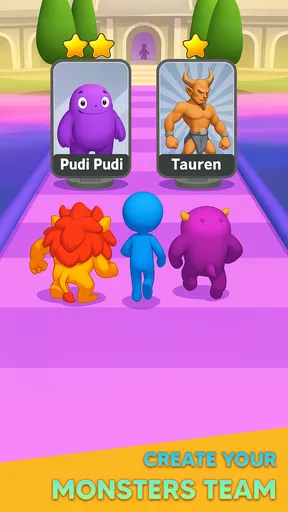
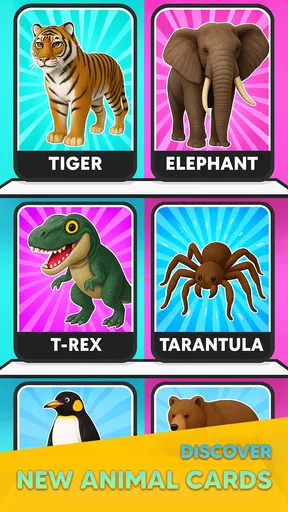
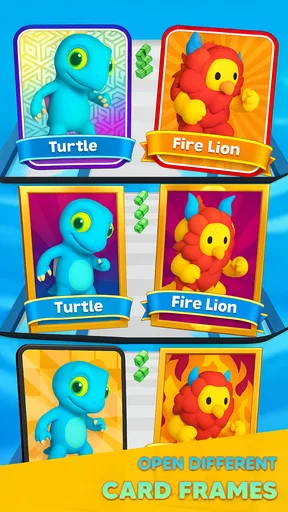
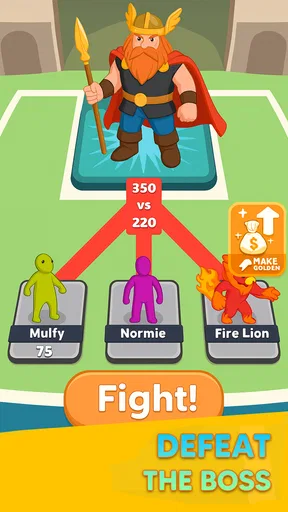

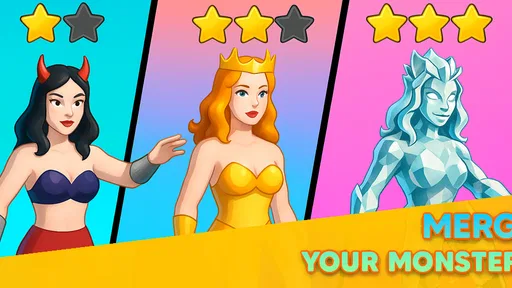
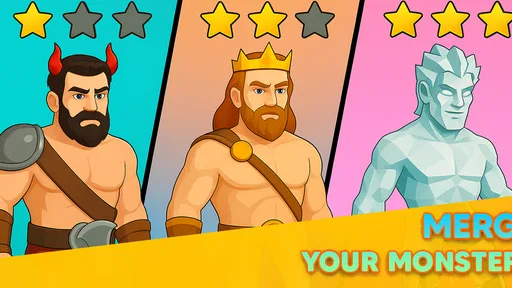
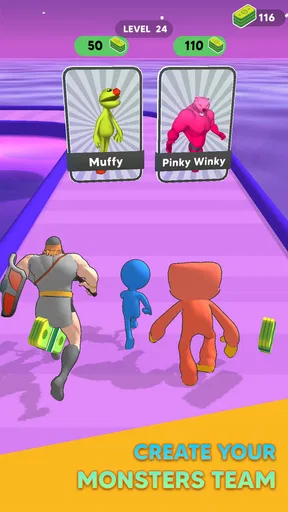
Our Review of Monster Draft : Merge Runner
 Analysis by Appyee
I approached Monster Draft: Merge Runner expecting a quick action game with a collection hook, and that is exactly where it makes its strongest impression. It combines monster-card collecting with merging, then places those choices inside battles against beasts. The result is easy to understand within minutes, but it still gives me reasons to think about which monsters deserve attention instead of tapping through every encounter without a plan.
That combination matters because this is not simply a card collector and not quite a traditional action game either. It sits between those categories, using the satisfaction of building a stronger collection while keeping the pace more immediate than a slow, menu-heavy battle title. I found it most appealing when I wanted short sessions with visible progress, rather than a game that demanded a long uninterrupted commitment.
How to decide whether this hybrid game suits you
The first question is what kind of action you want. If you enjoy collecting creatures, improving them through merges, and watching a growing roster become more capable, this game has a clear appeal. If you are looking for precise controls, deep real-time combat, or a story-led adventure, the card-and-merge structure may feel too lightweight. Knowing that distinction before installing it will save you from expecting the wrong experience.
I would also consider how much repetition you tolerate. A merge runner depends on repeating its central loop: gather or manage monster cards, combine monsters, and take the resulting strength into battles. That loop is satisfying when each improvement feels meaningful. It becomes less engaging when you want every stage to introduce a completely new mechanic. For me, the best use is as a compact game to return to regularly, not as a replacement for a large console-style action adventure.
The game is free to download, which makes trying it straightforward, although optional purchases range from under a dollar to about twenty dollars per item. I would treat that as a reason to decide on a personal spending boundary before getting deeply involved. The free entry is useful for testing the core loop, while the purchase range means enthusiastic players should pay attention to how quickly convenience or collection goals influence their decisions.
Its Teen content rating is another practical consideration. I would not treat that label as a substitute for checking the game yourself, especially if a younger player will use the device. For adults and older teenagers who enjoy monster-themed action, the tone is easy to understand, but families should still make the choice with the rating in mind.
The first sessions: learning the real loop
My early advice is to avoid merging everything immediately. The obvious temptation is to combine monsters whenever the option appears, because a stronger result feels like automatic progress. A better approach is to pause and think about what you are trying to improve: immediate battle power, a more useful collection, or a smoother path through the next encounter. That small decision changes the game from simple conversion into resource management.
This is one of the less obvious strengths of the design. The merge action is not only a visual upgrade; it also asks you to accept a trade-off. Keeping separate cards may feel less satisfying than creating one improved monster, but merging without a purpose can leave your collection less flexible. I found it helpful to treat duplicate or lower-priority monsters as potential merge material while keeping an eye on what I might need for the next battle.
That habit is especially useful during short sessions. If I only have a few minutes, I can sort out a merge decision and then play a battle without needing to learn a complicated system. When I have more time, I can be more deliberate about the direction of my collection. The game works well in both situations because its main choice is understandable even when I am not fully focused.
Why the card collection changes the feel of the action
The monster cards give the action a planning layer that a straightforward runner would not have. Instead of seeing each encounter as an isolated obstacle, I think about how the current fight fits into the larger collection. A battle can become a test of whether I prepared well, not just whether I reacted quickly enough. That makes progress feel more personal than simply moving from one stage to the next.
I also like that the collection gives players a reason to revisit the game after a disappointing run. A failed attempt is easier to accept when it points toward a clear improvement: merge more intelligently, build a better group of monsters, or return after strengthening the roster. This is a useful structure for players who enjoy gradual progress, though it can feel repetitive for anyone who wants failure to reveal a dramatic new story beat or a radically different level design.
One practical tip is to separate “progress” from “completion” in your mind. You do not need every monster to enjoy the next battle, and chasing a perfect collection can make the game feel like work. I had a better time when I used the cards to support my immediate goal rather than treating every missing piece as a problem that had to be solved at once.
Where this game wins over familiar alternatives
Compared with a conventional action game, Monster Draft: Merge Runner asks less of your hands and more of your judgment between encounters. It does not need the same level of constant precision that a reflex-focused title demands. That makes it a good fit for a commute, a waiting room, or a short break when I want something interactive but do not want to commit to a demanding session.
Compared with a pure merge game, it has a stronger sense of purpose because the monsters are being prepared for battles rather than combined only for an abstract score. The action gives the collection a reason to exist. Every improvement can be connected to the next beast you want to defeat, which makes the merge screen feel less detached from the rest of the experience.
It also has an advantage over a traditional card battler for players who dislike long turns and dense menus. The premise is quickly readable: collect, merge, and use the result against monsters. I would recommend it to someone who likes the idea of card-based progression but tends to abandon games that bury the main activity under too many systems.
The game has attracted a very large audience, with over fifty million installs and a 4.8 average from roughly 179 thousand ratings. Those figures do not decide whether it is right for me, but they do suggest that the central loop is accessible to a broad group of players. The developer, Oreon Studios, has built the experience around a concept that is easy to pick up without removing all room for personal choices.
Where another type of game may fit better
I would choose a conventional action title instead if my priority were precise movement, elaborate combat interactions, or a strong campaign. This game’s appeal comes from the relationship between cards, merges, and battles. If those layers are not interesting to you, the action alone may not provide enough variety to compensate.
I would also look elsewhere if I wanted a deep competitive card game where every turn revolves around carefully calculated tactics. The collecting and merging here are more approachable than that kind of experience. That is a strength for casual players, but it can be a limitation for experts who want a large strategic vocabulary and highly technical matchups.
A pure puzzle or merge game may be better for somebody who prefers calm, methodical play without battle pressure. The monster fights give this title momentum, yet they also mean that collection decisions are tied to overcoming opponents. Players who enjoy arranging combinations at their own pace may find a dedicated merge game more relaxing.
There is a similar trade-off with creature-collection adventures. Those games often emphasize exploration, character relationships, or a long-form journey. Here, the focus is tighter: the monsters are valuable because they support the merge-and-battle loop. I would not install this expecting a large world to wander through or a story to carry the experience.
Everyday use: a small routine that works
A realistic way to use the game is to make it part of a short daily break. I might open it while waiting for an appointment, check which monsters are available, make one considered merge, and play a battle or two. The session has a natural stopping point, so I do not need to reserve an entire evening. That makes it more practical than many action games that only feel worthwhile after a long warm-up.
For a longer session, I would begin by reviewing the collection instead of jumping straight into combat. I would identify which monsters are most useful for the immediate goal, decide which duplicates can be merged, and then use the improved roster in battle. This workflow reduces impulsive decisions and makes each run feel connected to the previous one.
Another useful routine is to stop after a meaningful upgrade rather than continuing until the loop becomes tiring. Merge games can encourage “just one more” decisions, and action encounters can make that feeling stronger. Ending after a successful improvement leaves the next session with a clear starting point and helps keep the game enjoyable rather than turning it into a chore.
What may frustrate you after the novelty fades
The central loop is also the main limitation. Collecting, merging, and battling are clear and approachable, but players who need constant mechanical surprise may eventually want more. I noticed that the game is most enjoyable when I am pursuing a specific improvement. Without that personal goal, repeated actions can start to feel like maintenance.
The free-to-play structure deserves attention as well. Since individual in-app purchases can reach nearly twenty dollars, I would not make a purchase simply because I had been playing for a long time. Time invested can create pressure to spend, especially when a desired monster or upgrade feels just out of reach. My recommendation is to decide in advance whether you are playing entirely free or allowing a controlled budget; making that choice early keeps the collection from controlling the session.
There is also a difference between convenience and genuine enjoyment. A purchase may make progress feel smoother, but it cannot fix a mismatch between your preferences and the game’s basic loop. If you already know that merging duplicates or repeating battles bothers you, spending money will not turn it into a different genre. I would play enough of the free version to judge the loop before considering any optional item.
Device compatibility is fairly broad for a modern mobile game because it supports Android versions from 7.0 onward. The current version is 4.0.10, so I would still keep the app updated through the normal store process when possible. For someone using an older compatible phone, expectations should remain sensible: a supported operating system does not automatically mean every device will feel equally smooth, especially when storage or general performance is limited.
Who should install it, and who should skip it
I think it is a good match for players who like monster collecting but want a faster route into action. It also suits people who enjoy making small optimization decisions without studying a complicated rulebook. The game is particularly convenient for short sessions, and the card system gives those sessions more direction than a basic endless runner.
I would recommend it to a friend who enjoys gradual upgrades and likes seeing a collection become stronger over time. I would tell that friend to focus on purposeful merges, avoid treating every card as equally important, and set a spending limit before optional purchases become part of the routine. Those three habits make the experience more controlled and more rewarding.
I would skip it if I wanted a story-heavy monster adventure, a highly technical fighting game, or a quiet puzzle experience with no combat pressure. I would also hesitate if repetitive progression quickly loses my attention. The game is not trying to satisfy all of those audiences, and its simplicity is only an advantage when the central loop is genuinely appealing.
The switching cost is low, but the collection can pull you back
Trying the game requires little commitment because it is free and the basic idea is immediately understandable. If it does not click, moving to a different action or merge title is easy; there is no need to relearn a large fictional world before deciding. That low entry cost is one of its most practical advantages.
The larger commitment is psychological rather than technical. Once I had spent time building a monster collection, I felt more reluctant to leave because I wanted to see the next improvement. That is normal for progression games, but it is worth recognizing. If you switch to a traditional action game, you may gain richer combat while losing the satisfaction of carrying a growing roster forward. If you switch to a pure merge game, you may gain calmer pacing while losing the battle goal that gives each merge urgency.
For that reason, I would not compare alternatives only by graphics or genre labels. Ask what you want to preserve: quick sessions, collection ownership, action momentum, or deeper strategy. Monster Draft: Merge Runner is strongest when you want all four in moderate amounts, not when you want one of them taken to an extreme.
My recommendation after playing the full loop
My final recommendation is positive, with a clear condition: try it if the idea of turning monster-card collection into battle preparation sounds more appealing than a pure action or pure merge game. The concept is focused, the learning curve is friendly, and the short-session format makes it easy to fit into everyday downtime.
I would keep expectations realistic. This is a free action game from Oreon Studios built around a repeatable collection-and-merge routine, not a substitute for a large adventure or a demanding competitive battler. Its Teen rating and optional purchases also make it worth approaching thoughtfully, particularly on a shared family device.
For me, the best reason to keep playing is the small decision before each improvement: which monster should become stronger, and what am I preparing for next? When that question interests you, the loop has enough purpose to stay engaging. When it does not, the game’s accessible structure can start to feel repetitive. If you want a compact monster battle game with meaningful merge choices, it is worth downloading; if you need deep combat or a substantial story, choose a different category instead.
Verdict
Strengths of Monster Draft : Merge Runner
- Simple merge mechanics are easy to learn and play one-handed.
- Short runs make it suitable for quick gaming sessions.
- Monster upgrades provide a satisfying sense of progression.
- Bright visuals and playful designs appeal to casual players.
- Offline play is convenient when you have no internet connection.
Limitations of Monster Draft : Merge Runner
- Repeated levels can make the gameplay feel predictable over time.
- Progress may slow considerably without frequent upgrades.
- Ad interruptions can affect the pace of short runs.
- Some upgrades may require patience or repeated grinding.
- The controls offer limited depth for experienced action players.
Other Releases by Oreon Studios
View All
Slice Master : Idle Clicker
Simulation4.6
Similar Picks in This Category
View All
Temple Run 2: Endless Escape
Imangi Studios4.1

PUBG MOBILE
Level Infinite4.3

Free Fire: 9th Anniversary
GARENA INTERNATIONAL I4.4

Talking Tom: Hero Dash Run
Outfit7 Limited4.3

slither.io
Lowtech Studios3.9

Sniper 3D:Gun Shooting Games
Wildlife Studios4.6
Frequently Asked Questions
What is Monster Draft: Merge Runner?
Monster Draft: Merge Runner is a casual action game that combines endless-running gameplay with monster collection and merging mechanics. You guide your character through obstacle-filled stages, gather or recruit monsters, and combine matching creatures to create stronger units. The main appeal comes from making quick decisions while running, then improving your team and progress between attempts.
How does the merging system work in Monster Draft: Merge Runner?
During gameplay, you collect monster cards or units and use matching creatures to upgrade your roster. Merging generally produces a stronger monster, which can improve your performance in later stages and encounters. Because available units and rewards may vary, it is worth thinking about which monsters to combine instead of merging everything immediately, especially when building a balanced team.
Is Monster Draft: Merge Runner free to download and play?
The game is available as a free download, but it may include optional in-app purchases and advertising. Purchases can potentially provide extra resources, progression boosts, or other convenience features, while ads may appear between activities or when claiming certain rewards. You can usually play without spending money, although progress may require more time and repeated runs.
Does Monster Draft: Merge Runner require an internet connection?
An internet connection may be needed for certain features, such as loading advertisements, synchronizing progress, receiving online rewards, or accessing promotional content. Basic gameplay may work in some situations without a constant connection, but offline availability can depend on the version installed and the device. Check the store listing and test the game before relying on it offline.
Is Monster Draft: Merge Runner suitable for children?
Monster Draft: Merge Runner is generally easy to understand because its controls and objectives are designed around simple running and merging actions. However, parents should review the game’s age rating, advertising, and in-app purchase settings before allowing children to play. If the game is used on a shared device, enabling purchase restrictions is recommended to prevent accidental transactions.
Play our best games!


